Cavity vs. Tooth Decay: The Essential Guide to Better Oral Health | Tooth Decay Treatment Explained
Tooth Decay Treatment Options
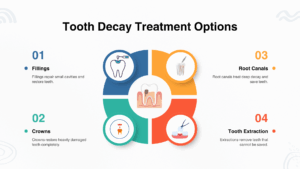
Once a cavity forms, it’s important to seek tooth decay treatment promptly. The earlier tooth decay is diagnosed, the easier it is to treat and restore the affected tooth. There are several options for treating tooth decay and cavities, depending on the severity of the damage:
- Fillings: The most common tooth decay treatment, fillings are used when a cavity has formed but the damage is not too extensive. Your dentist will remove the decayed portion of the tooth and fill the cavity with a material such as silver amalgam, composite resin, or ceramic.
- Crowns: If the cavity is larger and has caused significant damage to the tooth, a crown may be necessary. A crown covers the entire tooth, restoring its shape, strength, and function.
- Root Canals: When tooth decay reaches the pulp of the tooth, a root canal treatment may be required. This procedure involves removing the infected pulp, cleaning the root canals, and sealing the tooth to prevent further infection.
- Tooth Extraction: In severe cases where the tooth is too damaged to be saved, your dentist may recommend a tooth extraction. This is usually a last resort when other tooth decay treatment options are not feasible.
The Link Between Tooth Decay and Cavities
While cavities are a direct consequence of tooth decay, it’s important to understand that not all tooth decay results in cavities. In some cases, the tooth may remineralizer and heal itself in the early stages of tooth decay, especially if fluoride is introduced. However, once a cavity forms, the damage is irreversible, and professional tooth decay treatment is needed.
Regular visits to the dentist can help detect tooth decay before it progresses to cavities. Early intervention is key to avoiding extensive dental procedures and maintaining overall oral health.
Conclusion
In conclusion, tooth decay and cavities are closely linked but are not the same thing. Tooth decay is the process by which the enamel is broken down by acids, while a dental cavity is the actual hole that forms when the decay progresses. By practicing good oral hygiene, adopting a fiber-rich diet, cutting down on sugars and processed, acidic foods, and visiting your dentist regularly, you can prevent tooth decay from turning into cavities. When cavities do occur, timely tooth decay treatment can help restore your tooth’s health.
Remember, a healthy smile starts with proactive care. If you suspect you have tooth decay or a cavity, consult your dentist about the best course of treatment to keep your teeth strong and beautiful for years to come.