Why Wisdom Teeth Removal Is Necessary: Causes, Procedure, and Cost Explained
Wisdom teeth removal, also known as third molars, are the last set of teeth to develop in the mouth. For many people, wisdom teeth removal becomes necessary to prevent discomfort and dental complications. Although some individuals may have enough space for these teeth to emerge normally, most cases require removal due to misalignment, impaction, or potential oral health issues.
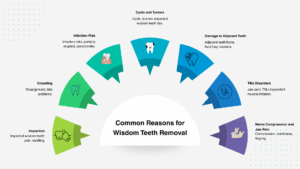
Common Reasons for Wisdom Teeth Removal
Wisdom teeth removal is often recommended by dentists for several reasons:
-
Impaction: When wisdom teeth do not have enough space to emerge, they may remain trapped in the jawbone or gums, causing pain and swelling.
-
Crowding: Erupting wisdom teeth can push adjacent teeth, leading to misalignment and bite problems.
-
Infection Risk: Partially erupted wisdom teeth can create pockets where bacteria accumulate, resulting in a gum infection commonly known as pericoronitis.
-
Cysts and Tumors: Impacted wisdom teeth are a common cause of developmental jaw cysts and tumors, such as dentigerous cysts, odontogenic keratocysts, and ameloblastomas.
-
Damage to Adjacent Teeth: Impacted teeth can damage nearby teeth and the jawbone. Their non-anatomic positions lead to food accumulation in areas that are hard to clean, allowing bacteria to thrive and cause irreversible damage to adjacent teeth and gums.
-
TMJ Disorders: Erupting or misaligned wisdom teeth can contribute to temporomandibular joint (TMJ) disorders and myofunctional pain disorder syndrome (MPDS). These third molars may irritate jaw muscles like the temporalis, pterygoid, and masseter, leading to symptoms such as jaw pain, difficulty in opening or closing the mouth, and TMJ discomfort.
-
Nerve Compression and Jaw Pain: When a wisdom tooth lies close to the inferior alveolar nerve, it can sometimes cause nerve compression, leading to lower jaw pain, tingling sensations, or even numbness (paresthesia) of the lower lip.
Understanding the Procedure and Cost
Extraction of wisdom teeth is a common dental procedure. Dentists usually perform a thorough examination and X-rays to determine the position of the teeth and the co
mplexity of removal. The wisdom teeth removal cost varies depending on factors like the number of teeth, type of impaction, and clinic location.
On average, patients should expect to pay for consultation, X-rays, anesthesia, and the extraction itself. Simple extractions are typically straightforward, while impacted teeth may require minor surgical intervention. Post-operative care is essential to prevent infection, manage pain, and ensure proper healing.
Benefits of Wisdom Teeth Removal
There are several advantages to timely wisdom teeth removal:
-
Prevents overcrowding and misalignment of teeth
-
Reduces the risk of infections, cavities, and gum disease
-
Prevents potential decay in adjacent teeth
-
Avoids cyst formation or jawbone damage
-
Alleviates pain, swelling, and discomfort associated with impacted teeth
It is important to consult a dental professional to determine whether removal is necessary. The wisdom teeth removal cost is often a worthwhile investment for long-term oral health.
Aftercare and Recovery
Following tooth extraction, maintaining oral hygiene and following dentist instructions are crucial. Ice packs, soft foods, and avoiding strenuous activity aid recovery. Most patients heal fully within a week, and the risk of complications remains low with proper care.
Choosing a qualified dental surgeon ensures that wisdom teeth removal is safe, effective, and comfortable. Considering the benefits and cost, preventive extraction often outweighs the potential complications of leaving problematic wisdom teeth untreated.